



Aliaksandr Kaminski
Born in Kreva. Kaminski researches the history of the town and its surroundings.
 11 Nov 2024
 12
12
A prophecy from the early twentieth century: Poland will rise when Kreva Castle lies in ruins
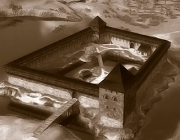
In 1912, the Polish magazine Ziemia published an article by Wladyslaw Zagorski on the history of Kreva Castle. In it, the author mentions, among other things, a legend about the murder of Keystut and the history of Poland.
 14 Aug 2024
12
14 Aug 2024
12
A forgery made in Poland. How the monument to the anniversary of the Union of Krewo was falsified
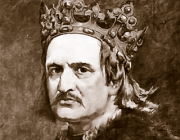
In the very center of Krakow stands a monument dedicated to the 500th anniversary of the Union of Krewo. According to the official version, it depicts King Wladyslaw II Jagiello of Poland and his wife Jadwiga. However, in these figures, the sculptor fashioned entirely different people.
14 Mar 2024
12
The murder of priest Levanchuk and his family. What happened on the tragic night 80 years ago
With the arrival of the Germans on West Belarusian lands during the Second World War, local Poles or, as a rule, polonized Belarusians began to hand over former Soviet activists to the Hitlerites. Not infrequently, representatives of the Belarusian intelligentsia, who already in pre-war times fought against polonization, fell into the ranks of "enemies".
3 Mar 2024
12
Candlesticks from cartridges and a chandelier from barbed wire. What the dugout temple at the positions near Kreva was like
In the magazine "Iskry" on December 25, 1916, an article about a mysterious dugout temple was published. It is known that it is about an object on the territory of the Ashmyany district, and, as it turned out - near Kreva.
19 Nov 2023
12
Where in Kreva was one of the first churches built in the Grand Duchy of Lithuania?
The first Christian church in Kreva was built in 1387. The question of its original location remains unanswered to this day.
21 Nov 2022
12
Fraternizations of Russians with Germans: frontline stories from Kreva and its surroundings
Fraternizations of soldiers of the Russian army with the German military became widespread after the February Revolution. Most often, it all came down to meetings on neutral territory in order to exchange things of a soldier's life. Sometimes such meetings were used by enemy intelligence and propagandists.