



The murder of priest Levanchuk and his family. What happened on the tragic night 80 years ago
 14 March 2024
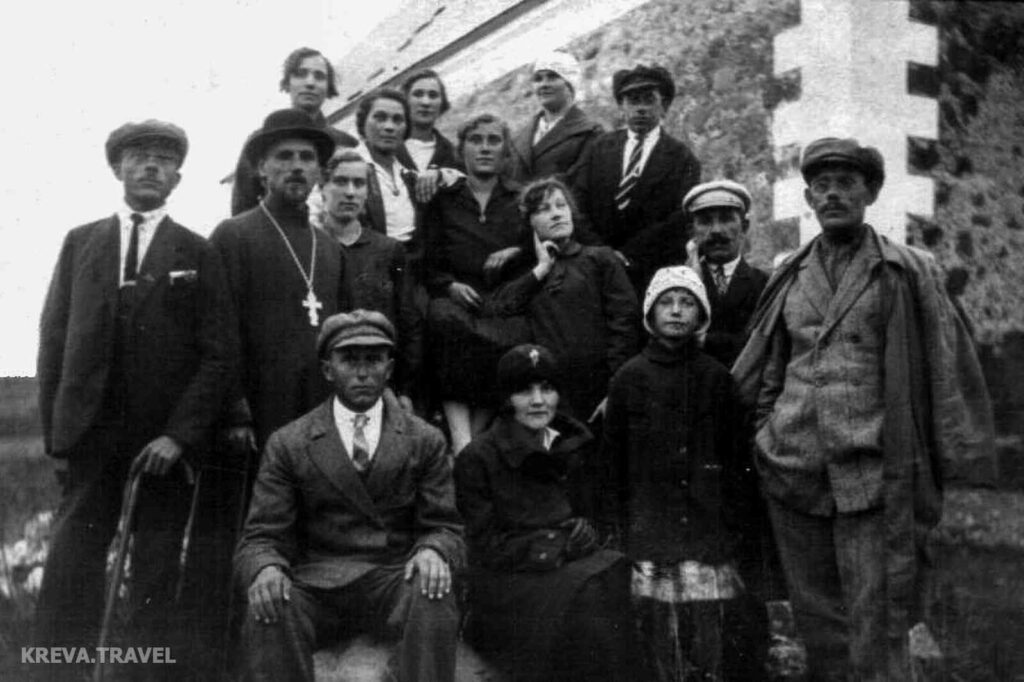
With the arrival of the Germans on West Belarusian lands during the Second World War, local Poles or, as a rule, polonized Belarusians began to hand over former Soviet activists to the Hitlerites. Not infrequently, representatives of the Belarusian intelligentsia, who already in pre-war times fought against polonization, fell into the ranks of “enemies”. Such a fate befell the Kreva priest Mikhail Levanchuk, his daughter, and niece, who were killed by activists of the Armia Krajowa.
The events of the tragic night, which the “akaucy” themselves do not like to mention in their memoirs, are recounted by local historian Aliaksandr Kaminski.
What happened
On the night from the 14th to the 15th of March 1944, a group of “akaucy” consisting of three people headed to the house of the Orthodox priest. According to long-time residents, these were so-called “Poles” from among the locals. The existence of an order for the liquidation of the Levanchuk family is known from the memoirs of Adam Walczak, one of the leaders of the operation to capture the Lithuanian police garrison in Kreva, which took place that same night.
In the Levanchuks’ house were Father Mikhail himself, daughter Larisa, niece Valentina, and a servant from the locals. The priest’s wife Elizabeth and son Leanid were away, so they managed to escape the slaughter. In his memoirs, Adam Walczak writes with regret that the priest’s family was not in full strength that night.
When the murderers thundered at the door, the servant managed to hide in the cellar under the house, which saved her life. From there she heard everything that was happening upstairs, and later recounted what she heard to fellow villagers.
Opening the door, Father Mikhail understood what awaited him. He asked the executioners to allow him to pray before death. The “akaucy” at this time brought the daughter and niece into the room. In their presence, one of the bandits inserted a carbine into the priest’s mouth and fired. Following this, the girls were also killed.
Why Levanchuk was killed
The Kreva priest and his family were blamed for “harmful activity against Poles”. This formulation was further supported by the assertion that the Levanchuks supposedly collaborated with the occupation authorities. But what actually stood behind such an accusation?.
Already in pre-war times, priest Mikhail Levanchuk spoke out boldly against the polonization of Western Belarusians and was a supporter of the belarusianization of the Orthodox Church. The oldest residents of the town and other contemporaries testify to this in their memoirs. The famous Belarusian Catholic priest Adam Stankevich, for example, noted in his diary a case when Polish teachers from schools near Kreva brought their students to the church for an excursion. Ignoring the remarks and protest from the teachers, the priest conducted the conversation with the students in their native Belarusian language, and not in Polish.
Having obtained the appropriate permission from the German leadership in Minsk, Father Mikhail opened a Belarusian school in one part of his house. He himself, as well as his daughter Larisa and niece Valiantina Shkutko, who came from Minsk, began to conduct classes here.
There is evidence that during the war, Levanchuk saved youth from being taken away for forced labor in Germany.
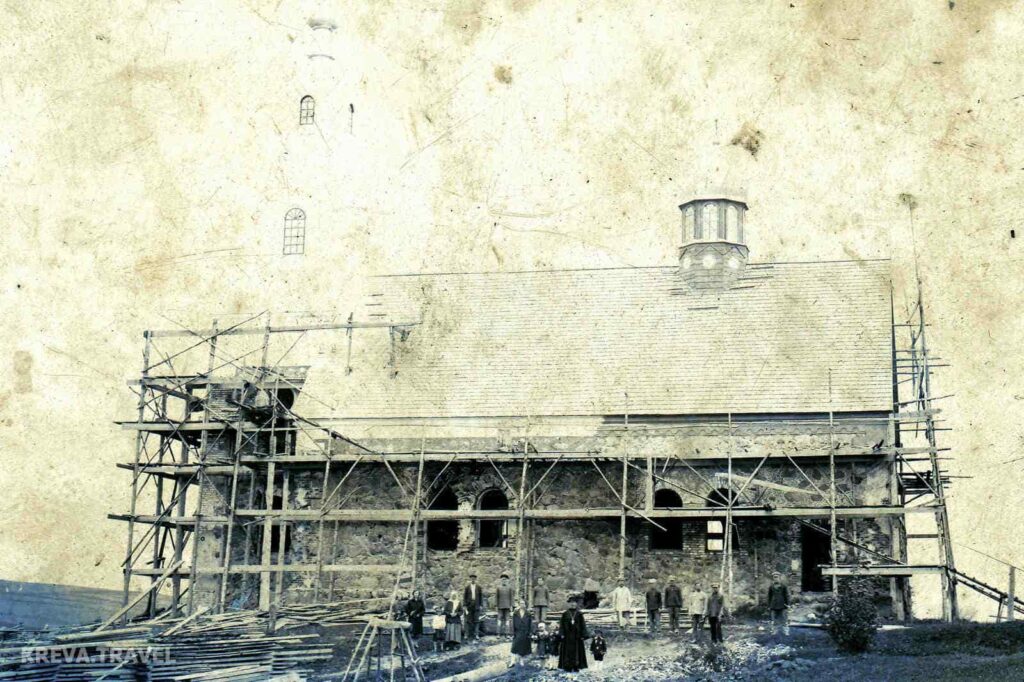
Apparently, the opening of a Belarusian school on the territory that belonged to Poland before the war was that harmful activity for the Poles. And the priest’s persistent appeals to the occupation authorities for permission to do this, as well as petitions before them in defense of the youth, were classified by them as collaboration.
Who else died at the hands of the “akaucy”
Still on the way to Kreva, having stopped in the neighboring village of Chukhny, the “akaucy” settled scores with Kanstantin German and Stiapan Goman. The first of them left four children orphaned, with the youngest being only four weeks old. These people were blamed for having been elected people’s deputies with the arrival of Soviet power. Somehow, in the first days of the occupation, these people remained outside the attention of the Germans, and they were not shot, as happened with several residents of the town and some neighboring villages accused of collaborating with the communists.
According to the testimony of long-time residents, on the same night, a doctor from Baruny was also killed, who also participated in the Belarusian movement and refused to collaborate with the Armia Krajowa.
A little earlier, on February 23 of that same year, in the village of Rakautsy, legionnaires killed former collective farm activists Ivan and Pyotr Andryyalovich, Kanstantin Stryha, and Yuliyan Tytush. Former collective farm chairman Kanstantin Kazakevich managed to escape the slaughter by a miracle: at the time of the arrival of the uninvited guests, he was not at home. In the village of Lyudvinova, supposedly for a friendly attitude toward Soviet power, Polish partisans shot Mikalai Stryha. In Kryusk, for the same thing, Fyodor Durka, Stanislav Rodzevich, and Anton Kazak were killed. In the village of Rakuteva, a Stryha family of five was shot. With the arrival of Soviet power, these people were provided with a manor house for living, which had become empty after September 1939. When its owner returned with the arrival of the Germans, the Stryhas were forced to move back to their former place of residence. However, that seemed insufficient to him, and together with his allies from the Armia Krajowa, he took advantage of a convenient moment to settle scores with the poor people, depriving them of their lives.
