




The study of hunger in the Warsaw Ghetto: the scientific feat of a doctor from Kreva
 7 April 2026
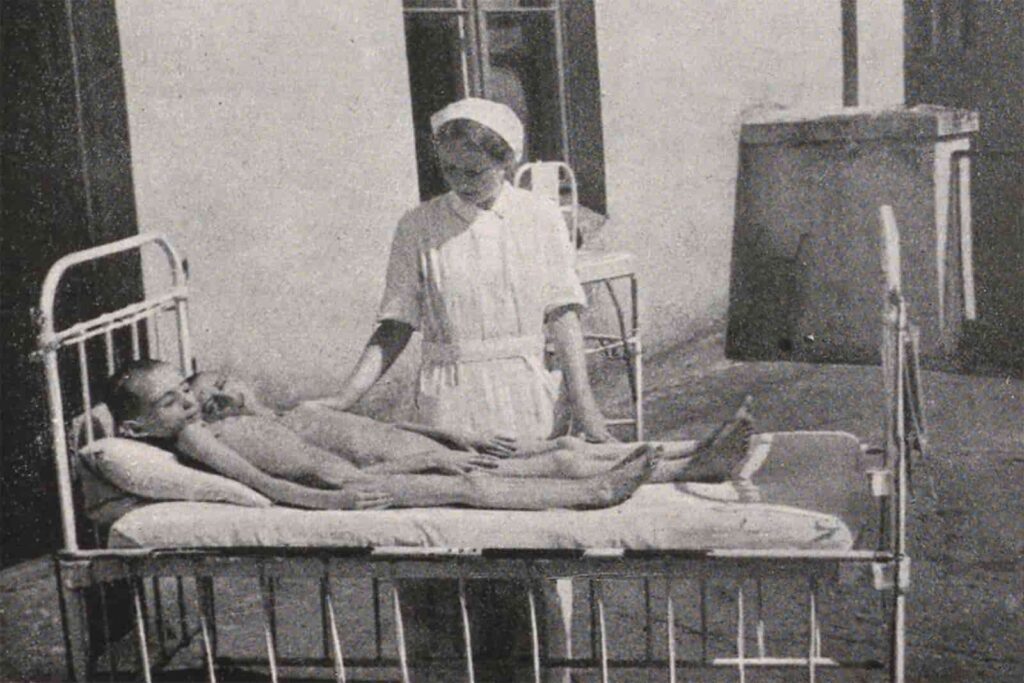
In 1946, a book of unique studies on the impact of hunger on the human body was published in Warsaw. The study of the problem took place within the walls of the Warsaw Ghetto, where the participants in the experiment were its residents, and the scientists were Jewish doctors who also lived in the camp. The man who initiated and led the scientific work, and also secretly from the Germans managed to pass the results to freedom, was Israel Milejkowski from Kreva.
A significant part of the documents that would have told about Milejkowski’s life was lost during the bombings of Warsaw, as well as burned in the ghetto. Modest information has been preserved in the archives of the Polish army, the medical archive of Warsaw, and also in the memoirs of his associates.
Childhood and youth
Israel Milejkowski was born in Kreva on July 17, 1887, into the family of Meir and Bella. The family moved to Warsaw at the turn of the century. In the city’s address book, the father’s name first appears in 1910. Experienced in trade, the emigrants quickly created competition for the local population. As early as 1912, Meir Milejkowski’s name figured on the voter lists, and only wealthy people had the right to vote in those years. The money allowed the father to send his son to the university, where he engaged in the study of skin and venereal diseases.
When the First World War began, Israel Milejkowski joined the ranks of the Russian army as a commander of a field hospital. However, already after a month of service – in September 1914 – he fell into German captivity, in which he spent about three years. There Israel worked as a doctor in a prisoner-of-war camp. After release from captivity in May 1917, he returned to military service as a hospital doctor in Moscow, where he worked until the signing of the Treaty of Versailles and Poland gaining independence in 1918. And in May 1919, he again joined the army – this time the newly created Polish one. During his service, he worked in various hospitals, including at the forward positions of the Polish-Soviet war.
After dismissal from the army in 1923, Milejkowski got a job at a Jewish hospital in Warsaw, and also opened a private clinic at his home.
Visit to the historical homeland
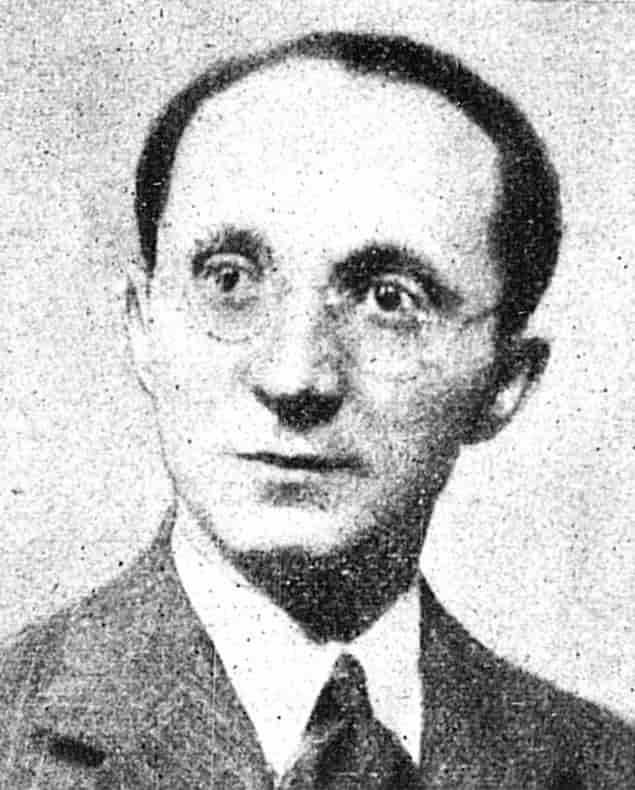
The move from a provincial town to Warsaw – a modern secular city – led to profound changes in Milejkowski’s worldview. Contemporaries and relatives noted that he no longer adhered to the strict rules of religious life: he was often seen without the traditional kippah, without a beard and peyot, and he even allowed himself to smoke on Shabbat. According to the memoirs of colleagues, he was distinguished by temperament, always spoke loudly and gestured actively.
In April 1936, Milejkowski visited Eretz Israel to take part in the First World Congress of Jewish Doctors. The visit to the historical homeland evoked deep emotions in him, but simultaneously revealed and strengthened an internal crisis of identity. The congress itself aimed to unite Jewish doctors from all over the world and create a professional center, which was especially relevant against the background of the Nazis coming to power in Germany and the persecution of Jewish medics. However, it was exactly at this event that Milejkowski faced a painful experience caused by the language barrier. The official language of the congress and the new society of the Land of Israel was Hebrew. Milejkowski knew several European languages and Yiddish, and could also read religious texts, however he was not fluent in conversational Hebrew. This forced him, a prominent speaker and leader in Poland, to feel alien and “mute” among his own at the congress.
Despite his sincere support for Zionism and admiration for the construction of a new country, Milejkowski finally realized himself as a Polish Jewish intellectual. He understood that his true mission was to return to Poland to continue fighting for the rights of Jewish doctors in Europe.
What is the value of the research
The research on hunger in the Warsaw Ghetto was conducted from February to the second half of July 1942. The work was interrupted by the beginning of the so-called “Great Action” – the mass deportation of residents to the Treblinka death camp.
In the ghetto, Doctor Milejkowski worked as the head of the Health Department, which was subordinate to the Jewish Council and was engaged in organizing medical assistance, fighting infections and managing hospitals. On his shoulders lay the management of a medical system that practically had no medicines, nor resources, nor food for patients. The research was conducted secretly and in extraordinary conditions, which not a single scientist could ever have and would not have the moral right to artificially create in a laboratory. Due to the mass hunger in the Warsaw Ghetto, an unlimited amount of clinical material ended up at the disposal of the researchers – people were dying directly on the streets. They were able to study in detail the processes of physical destruction of the human body under the influence of an extreme calorie deficit.
Doctors viewed hunger not simply as a symptom of exhaustion or an accompanying phenomenon with other illnesses (for example, with tuberculosis), but as an independent, real illness with its own pathology and clinical course. The work of the doctors became proof of the fact that the Germans purposefully used mass hunger as an effective instrument for destroying Jews.
What Milejkowski said about Nazism
Milejkowski attentively followed the development of events in Germany. His assessment of Nazism survived a significant evolution. Immediately after Hitler came to power in January 1933, he published the article “Nasze Memento” (Our Reminder), in which he mistakenly assessed Nazism as a short-term anomaly. Milejkowski called Hitler a “barbaric demagogue” and believed that his power would end quickly: “In the dark and quiet night that has descended on life in Germany, Hitler’s star can shine for an instant, to then go out and disappear forever”. He believed that Nazism would dissipate like a fog, leaving on the history of the German people a “big stain”, which will bring Jews only a sad memory, and Germans – a tragic disappointment. He also saw the roots of antisemitism in ancient Teutonic traditions.
However, very quickly his illusions dissipated. Already in 1934 he wrote an article with the alarming headline “Hitler ante portas!” (Hitler at the gates!). He realized that Nazism carries an existential threat for the entire Jewish people. Israel Milejkowski began to sharply criticize Jewish communities and parties for the fact that they waste time on internal disputes. The doctor urged to immediately stop political disagreements and unite for the sake of survival.
How fate turned out
Milejkowski’s daughter Janina, who lived under cover on the Polish side in Warsaw and had connections with the underground, prepared an escape from the ghetto for her father. Documents were forged for him and there was a safe hideout. However, the doctor resolutely refused the escape. He declared that as a leader and a doctor he cannot abandon his patients. In January 1943 during another wave of mass deportations from the ghetto he was captured and sent to a death camp.
Among those who survived, rumors circulated that Milejkowski and several other doctors did not reach Treblinka alive: in the train car they took poison in order to independently pass from life and not give the Nazis the opportunity to kill them.
